Best AI Companion Devices for Seniors (2026)
By Shivansh Joshi, Founder, Reca · 5 min read · Updated August 27, 2026
The short answer: the best AI companion for your parent depends on where they live and what they need most. Western options like ElliQ and Ato are mature but English-first. India now has its own entrants — Silver Saathi and ELRO — plus Reca, built specifically for Indian elders across languages. Below is an honest, side-by-side comparison of all seven, including where each falls short.
What is an AI companion for seniors?
An AI companion for seniors is a voice-first device or service that talks with an older adult — holding natural conversation, offering reminders for medicines and meals, and giving families peace of mind. The best ones require nothing to learn: no apps, no menus, often no screen. The person just talks, and it responds. This isn’t a niche problem it’s solving: India’s Longitudinal Ageing Study found elder loneliness climbs to 37% among those living alone (LASI Wave-1, IIPS), and fewer than 1% of India’s elderly have access to any organised care (Samarth Elder Care) — which is exactly the gap this category is trying to fill.
What to look for
- Voice-first, low-friction: ideally no screen or app to master.
- Language: does it speak your parent’s actual language, naturally, or just translate commands?
- Proactivity: does it start conversations and check in, or only respond?
- Reminders & routines: medicines, meals, appointments, prayers.
- Family connection: can relatives send notes, get updates, or trigger an emergency alert?
- Privacy: companionship without turning the home into a surveillance device.
- Price & region: hardware cost or subscription, and where it’s actually available.
The main options in 2026
ElliQ
A proactive tabletop companion robot that initiates conversations, suggests activities, and remembers preferences. Mature and well-studied; Western, English-first, and a premium device.
Ato
A screen-free, voice-first companion for seniors — “plug it in and talk.” Clean, low-friction positioning. English-oriented and Western-market.
Meela
A phone-based companion that calls on a schedule and chats in real time — nothing to install, you just answer the phone. Great for the very tech-averse; relies on scheduled calls rather than always-there presence.
ElderVoice
Daily check-in calls with conversation, medication reminders, and family alerts. Strong on the safety/check-in angle.
Sentai
A UK-made voice companion focused on independence and reassurance “without turning the home into a surveillance zone.” Privacy-forward.
Silver Saathi
A free, phone-app-based companion built for Hindi-speaking Indian elders — no separate hardware. It reads uploaded prescriptions to set medicine reminders automatically, understands Hindi/English/Hinglish, and has a one-tap SOS that alerts family and can escalate to 112/108 (saathiai.health). Strongest where budget is the priority and a smartphone is already in the house; it’s an app experience, not an always-on companion device.
ELRO
A standalone device built by Achala IT Solutions, marketed as “India’s first elderly companion.” It proactively starts conversations, plays games and jokes for entertainment, supports video calls with family or a doctor, tracks prescriptions with one-touch reordering, and dials emergency services if it detects the person hasn’t been active (elro.ai). The closest direct competitor to Reca on hardware form factor.
Reca — built for Indian elders, across languages
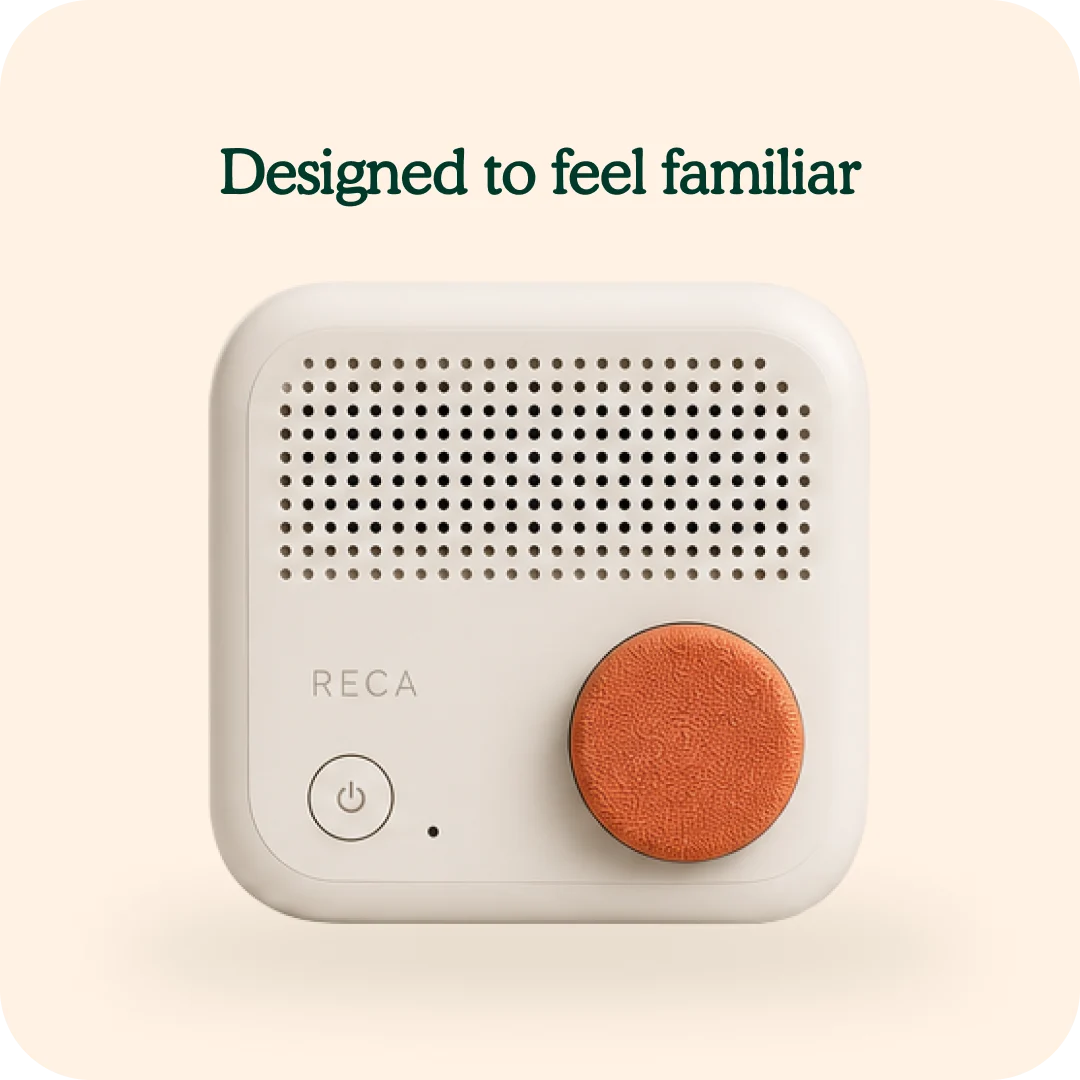
The gap in the Western options above: they’re built for English-speaking, Western households. Reca is a voice-first companion designed specifically for Indian elders — it converses naturally in Hindi, Tamil, Telugu, Bengali, Marathi and more, knows their prayers and rituals (satsang, bhajans, pranayama), and remembers their medicines. For an Indian parent, talking to a device in their mother tongue, about a life it actually understands, is a different experience than an English assistant or a single-language Hindi app.
Comparison at a glance
| Device | Voice-first | Languages | Proactive | Family link | Built for |
|---|---|---|---|---|---|
| ElliQ | Yes (+ screen) | English | Yes | Yes | US/Western elders |
| Ato | Yes, screen-free | English | Yes | Yes | Western elders |
| Meela | Yes (phone calls) | English | Scheduled | Yes | Tech-averse elders |
| ElderVoice | Yes (calls) | English | Check-ins | Yes | Safety check-ins |
| Sentai | Yes | English | Yes | Yes | UK elders, privacy |
| Silver Saathi | Phone app | Hindi, English, Hinglish | Reminders (scheduled) | Yes (SOS + WhatsApp) | Budget-conscious Indian families |
| ELRO | Yes, device | Hindi, English | Yes | Yes (video + emergency) | Indian elders, hardware |
| Reca | Yes, screen-free | Indian languages (Hindi, Tamil, Telugu, Bengali, Marathi+) | Yes | Yes | Indian elders, multilingual |
Which is right for your parent?
- Tech-averse, just wants a chat: Meela (phone-based) or a screen-free device like Ato or Reca.
- Safety/check-in is the priority: ElderVoice, ElliQ, or ELRO (for device-based emergency escalation).
- Budget is the constraint and a smartphone is already there: Silver Saathi’s free app covers medicine reminders and SOS well.
- Your parent is an Indian elder who’d light up talking in their own language about their own world, beyond Hindi: Reca.
Whatever you choose, an AI companion works best alongside human connection — see how to help aging parents who live alone and the signs of loneliness.
FAQ
Do AI companions actually reduce loneliness in seniors? Many users and care programs report meaningfully lower self-reported loneliness and anxiety. They help most as a daily presence alongside family contact, not as a replacement for it.
Are AI companions safe and private for elderly users? Reputable ones are designed for companionship rather than surveillance. Check the maker’s data and privacy policy, and favor devices that are transparent about what they record.
Is there an AI companion that speaks Indian languages beyond Hindi? Yes — Reca is built specifically for Indian elders and converses in Hindi, Tamil, Telugu, Bengali, Marathi and more, with cultural context most Western devices and Hindi-only apps lack.
What’s the difference between Silver Saathi, ELRO, and Reca? Silver Saathi is a free phone app, best for Hindi-speaking families on a budget who already have a smartphone in the house. ELRO and Reca are both standalone hardware devices; ELRO leans into video calling and emergency escalation, while Reca leans into natural conversation across multiple Indian languages and cultural context (prayers, bhajans, daily routines).